

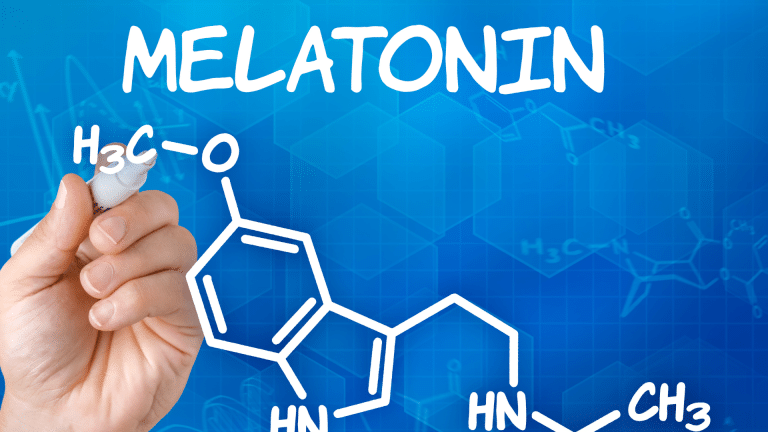
Melatonin is far more than a sleep supplement. Produced in the pineal gland, gut, immune cells, and within the mitochondria of virtually every cell, it functions as a master circadian regulator, potent antioxidant, and key participant in metabolic, immune, and reproductive health. For BHRT providers, its clinical significance extends well beyond sleep support: melatonin production declines with age in parallel with sex hormones, and declining estradiol directly impairs the serotonin-to-melatonin conversion pathway — meaning hormonal decline and disrupted melatonin rhythm are often intertwined in the perimenopausal and postmenopausal patient.
At the mitochondrial level, melatonin is synthesized on demand as a free radical scavenger, neutralizing reactive oxygen species generated during normal energy production. Mitochondrial melatonin concentrations exceed those in any other subcellular compartment — a distribution that reflects how essential it is to cellular integrity (Reiter et al., 2022). The ovaries are particularly melatonin-rich, where it protects follicular mitochondria from oxidative damage and supports oocyte quality. As melatonin declines with age, this protective capacity diminishes, contributing to ovarian aging and reduced hormonal output.
Melatonin also plays a clinically meaningful role in glucose regulation. Its nocturnal rise appropriately suppresses insulin release during the fasting sleep window, and variants in the melatonin receptor gene MTNR1B are associated with elevated fasting glucose and increased type 2 diabetes risk (McMullan et al., 2013). In the oncologic space, melatonin has garnered growing attention for its tumor-suppressive properties — supporting p53 activity, dampening inflammatory NF-κB signaling, inhibiting HIF-1α-driven glycolysis, and redirecting glucose metabolism back toward normal mitochondrial oxidative phosphorylation. A 2025 review in Frontiers in Pharmacology characterized melatonin as a natural guardian in cancer treatment, reflecting the depth of emerging evidence for its oncostatic role (Cao et al., 2025).
In BHRT practice, melatonin is best understood as an adjunct that complements hormone optimization rather than replacing it. Patients presenting with sleep onset difficulty, nighttime waking, vasomotor-related sleep disruption, or signs of mitochondrial stress are strong candidates for evaluation. Cofactor support — including B6 (as P5P), magnesium, and zinc — alongside estradiol optimization addresses both the substrate and the signaling environment required for endogenous melatonin synthesis.
Clinical Note (Dosing)
For circadian entrainment and sleep onset, 0.3–1 mg taken 2–3 hours before the desired sleep time is appropriate and consistent with physiologic dim-light melatonin onset (DLMO). For sleep maintenance and more significant sleep disruption, 1–5 mg is supported by the Sleep Support protocol in the BHRT Training Academy Prescribers Manual, with immediate-release preferred for sleep onset and sustained-release for nighttime waking (White, 2025). Doses above 5 mg are reserved for specific therapeutic contexts. Evening blue light avoidance, blood sugar stabilization, and cortisol management are essential lifestyle foundations that directly support endogenous melatonin production.
Safety Considerations
Melatonin is generally well tolerated at doses used for sleep and circadian support. Morning grogginess and phase-shifting of the sleep cycle are the most common adverse effects and typically indicate excessive dose or mistimed administration — a dose as low as 5 mg immediate-release can produce supraphysiologic plasma levels that persist well into the next day (Garaulet et al., 2020). Caution is warranted in patients on anticoagulants, immunosuppressants, or diabetes medications. Exogenous melatonin does not suppress endogenous production. Safety data in pregnancy is insufficient; use should be discussed with the patient’s obstetric provider. As with all supplements in the BHRT context, melatonin is an adjunct to — not a replacement for — appropriately tested and dosed hormone therapy.
Key References
- Reiter RJ, Sharma R, Rosales-Corral S, et al. Melatonin: a mitochondrial resident with a diverse skill set. Life Sciences. 2022;301:120612. doi:10.1016/j.lfs.2022.120612
- McMullan CJ, Schernhammer ES, Rimm EB, Hu FB, Forman JP. Melatonin secretion and the incidence of type 2 diabetes. JAMA. 2013;309(13):1388. doi:10.1001/jama.2013.2710
- Cao Y, Zhang H, Chen X, Li C, Chen J. Melatonin: a natural guardian in cancer treatment. Front Pharmacol. 2025;16. doi:10.3389/fphar.2025.1617508
- Garaulet M, Qian J, Florez JC, et al. Melatonin effects on glucose metabolism: time to unlock the controversy. Trends Endocrinol Metab. 2020;31(3):192–204. doi:10.1016/j.tem.2019.11.011
- Guo YM, Sun TC, Wang HP, Chen X. Research progress of melatonin in improving ovarian function. Aging. 2021;13(13):17930–17947. doi:10.18632/aging.203231
- White D. Hormones and HRT Prescribers’ Manual, 2nd Edition. BHRT Training Academy; 2025.
