

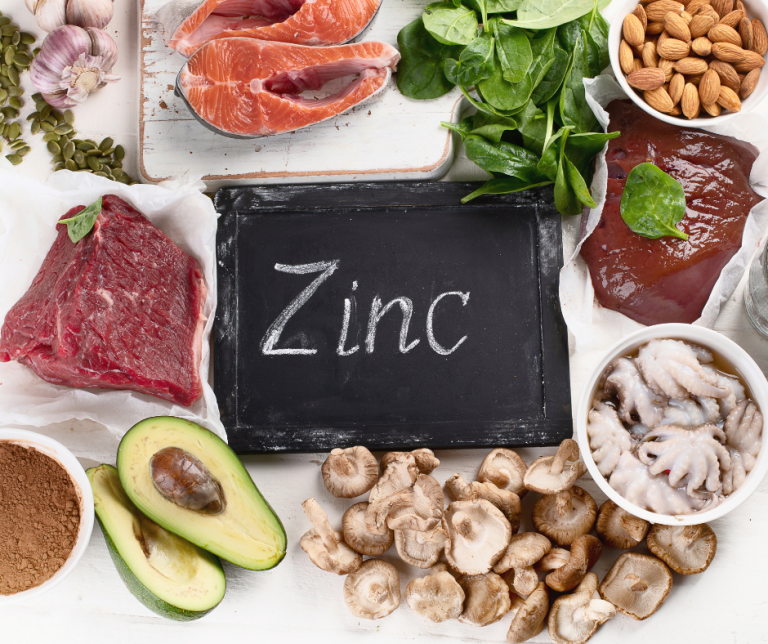
Zinc is a vital trace mineral involved in nearly every aspect of hormone production, signaling, and metabolism. It supports thyroid function by enhancing T4 to T3 conversion, regulates insulin storage and secretion in pancreatic β-cells, and plays a direct role in testosterone synthesis and spermatogenesis. Zinc also influences 5α-reductase activity, important in androgen metabolism, and modulates hormone receptor sensitivity at the cellular level. In women, studies show that zinc supplementation can improve insulin resistance, lipid profiles, and reproductive hormone balance, particularly in conditions like PCOS.
Clinical highlights:
Thyroid: Required for T3 conversion and receptor function.
Reproductive hormones: Supports testosterone, DHT, and ovulatory regulation.
Metabolic health: Improves insulin sensitivity and glucose control in deficiency states.
Neuroendocrine effects: Affects mood, appetite (via leptin), and growth via IGF-1.
Dosing: Common range is 15–40 mg/day. Monitor for copper deficiency if supplementing long-term.
Zinc is especially beneficial for patients with hypothyroidism, PCOS, hypogonadism, and metabolic syndrome. Providers should assess dietary intake and consider zinc levels when addressing hormone-related concerns.
