

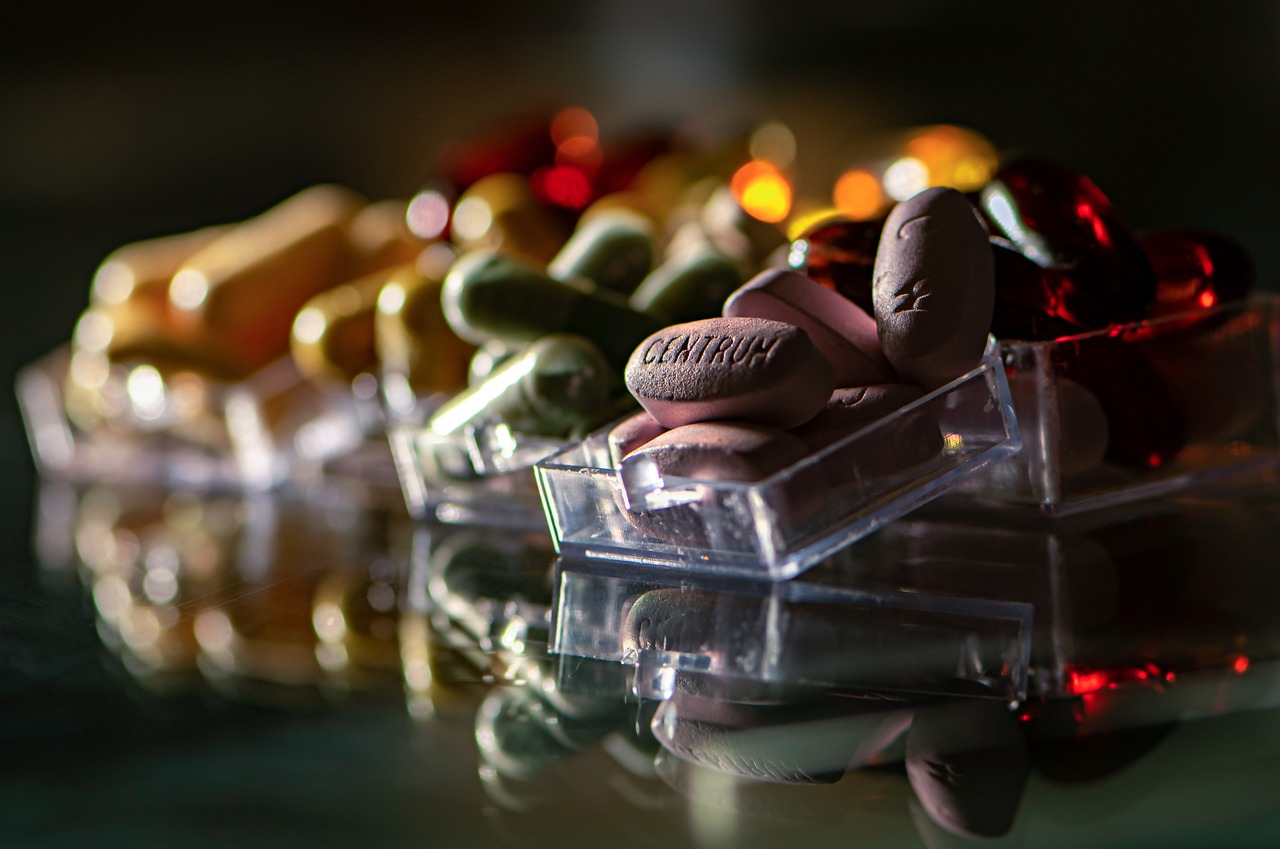
Breast health belongs in every hormone conversation. Patients who begin hormone therapy often ask what else they can do to support breast tissue—and they deserve answers grounded in evidence, not marketing. This month we look at five supplements with published human data relevant to breast health. The strength of that evidence varies widely, and we present each one honestly. None of these replaces screening, surveillance, or oncology care.
DIM (3,3′-Diindolylmethane)
DIM is the primary active metabolite of indole-3-carbinol from cruciferous vegetables, and its main clinical relevance lies in estrogen metabolism. DIM shifts hepatic estrogen hydroxylation toward the 2-hydroxy pathway and away from the more proliferative 16α-hydroxy pathway—the same ratio many BHRT providers track on urinary metabolite testing. In a 12-month randomized placebo-controlled trial of 130 women taking tamoxifen, DIM at 150 mg twice daily raised the 2/16α-hydroxyestrone ratio and increased SHBG by roughly 25 nmol/L, though breast density did not change. The same trial delivered a critical finding—DIM lowered plasma levels of endoxifen and other active tamoxifen metabolites. DIM favorably modifies estrogen metabolism, but no trial has yet shown it reduces breast cancer incidence.
Clinical Note (Dosing): Trials have used 108 mg daily to 150 mg twice daily of absorption-enhanced DIM, with metabolite testing useful to confirm response.
Safety Considerations: DIM is generally well tolerated; headache, GI upset, and darkened urine occur occasionally. Avoid DIM in patients taking tamoxifen, given its documented reduction of active tamoxifen metabolites, and in pregnancy.
Key References
Thomson, C. A., Chow, H. H. S., Wertheim, B. C., Roe, D. J., Stopeck, A., Maskarinec, G., Altbach, M., Chalasani, P., Huang, C., Strom, M. B., Galons, J. P., & Thompson, P. A. (2017). A randomized, placebo-controlled trial of diindolylmethane for breast cancer biomarker modulation in patients taking tamoxifen. Breast Cancer Research and Treatment, 165(1), 97–107. https://doi.org/10.1007/s10549-017-4292-7
Dalessandri, K. M., Firestone, G. L., Fitch, M. D., Bradlow, H. L., & Bjeldanes, L. F. (2004). Pilot study: Effect of 3,3′-diindolylmethane supplements on urinary hormone metabolites in postmenopausal women with a history of early-stage breast cancer. Nutrition and Cancer, 50(2), 161–167. https://doi.org/10.1207/s15327914nc5002_5
Molecular Iodine
Breast tissue actively concentrates iodine, and molecular iodine (I₂) appears to act on breast tissue through pathways distinct from iodide’s thyroid effects. The clearest clinical evidence involves fibrocystic breast changes and cyclic mastalgia. In a multicenter randomized double-blind trial of 111 euthyroid women with breast pain and fibrosis, molecular iodine produced dose-related pain reduction over 6 months, and more than half of women on 6 mg daily reported clinically significant improvement. Earlier controlled work found molecular iodine produced both subjective and objective improvement in fibrocystic disease with less thyroid impact than sodium iodide. Data suggesting a protective role against breast cancer remain largely preclinical, so iodine fits best as breast-tissue support for symptomatic patients.
Clinical Note (Dosing): Molecular iodine at 3–6 mg daily for at least 3–6 months showed the most consistent benefit for cyclic breast pain.
Safety Considerations: Obtain TSH, free T4, free T3, and thyroid antibodies before starting and monitor periodically. Use caution in autoimmune thyroiditis, nodular thyroid disease, hyperthyroidism, and known iodine sensitivity.
Key References
Kessler, J. H. (2004). The effect of supraphysiologic levels of iodine on patients with cyclic mastalgia. The Breast Journal, 10(4), 328–336. https://doi.org/10.1111/j.1075-122X.2004.21341.x
Ghent, W. R., Eskin, B. A., Low, D. A., & Hill, L. P. (1993). Iodine replacement in fibrocystic disease of the breast. Canadian Journal of Surgery, 36(5), 453–460.
Vitamin D3 (Cholecalciferol)
Vitamin D receptors are expressed throughout breast tissue, where vitamin D regulates cell differentiation and proliferation. Observational studies consistently link higher 25(OH)D levels with lower breast cancer risk, but randomized data tell a more nuanced story. The VITAL trial randomized 25,871 adults to 2,000 IU daily or placebo for a median 5.3 years and found no reduction in overall cancer incidence. A secondary analysis, however, showed a 17% reduction in advanced cancers—metastatic or fatal—with the strongest effect in participants of normal weight (HR 0.62). These findings covered all cancer types, not breast cancer specifically. For BHRT providers, correcting deficiency remains a sound foundation of care, with the most compelling signal pointing toward cancer progression rather than prevention.
Clinical Note (Dosing): Typical dosing ranges from 1,000–5,000 IU daily, individualized to serum 25(OH)D and rechecked after 8–12 weeks.
Safety Considerations: Monitor calcium and 25(OH)D at higher doses. Use caution in patients with a history of kidney stones, granulomatous disease, primary hyperparathyroidism, or concurrent thiazide diuretic use.
Key References
Chandler, P. D., Chen, W. Y., Ajala, O. N., Hazra, A., Cook, N., Bubes, V., Lee, I. M., Giovannucci, E. L., Willett, W., Buring, J. E., & Manson, J. E. (2020). Effect of vitamin D3 supplements on development of advanced cancer: A secondary
analysis of the VITAL randomized clinical trial. JAMA Network Open, 3(11), e2025850. https://doi.org/10.1001/jamanetworkopen.2020.25850
Flaxseed Lignans
Flaxseed is the richest dietary source of lignans, which gut bacteria convert into enterolactone and enterodiol—weak phytoestrogens that modulate estrogen receptor signaling. The key human trial randomized postmenopausal women with newly diagnosed breast cancer to a muffin containing 25 g of flaxseed or a placebo muffin daily until surgery, roughly five weeks. The flaxseed group showed a 34% reduction in the Ki-67 proliferation index, a 71% reduction in c-erbB2 (HER2) expression, and a 31% increase in apoptosis, with no change in the placebo group. The trial was small, with 32 women, and measured tumor biomarkers rather than clinical outcomes. Still, flaxseed offers an inexpensive, food-based option with a biologically plausible mechanism.
Clinical Note (Dosing): Ground flaxseed at 25 g daily (about 2½ tablespoons) matches the trial dose; flaxseed oil contains few lignans and does not substitute.
Safety Considerations: Flaxseed is well tolerated but may cause bloating; patients should increase fluid intake and separate it from oral medications by 1–2 hours to avoid absorption interference.
Key References
Thompson, L. U., Chen, J. M., Li, T., Strasser-Weippl, K., & Goss, P. E. (2005). Dietary flaxseed alters tumor biological markers in postmenopausal breast cancer. Clinical Cancer Research, 11(10), 3828–3835. https://doi.org/10.1158/1078-0432.CCR-04-2326
Green Tea Extract (EGCG)
Epigallocatechin-3-gallate (EGCG), the dominant catechin in green tea, has shown anti-proliferative and anti-angiogenic effects in laboratory models. The Minnesota Green Tea Trial tested this in 1,075 postmenopausal women with dense breasts, giving 843 mg of EGCG daily or placebo for 12 months. Green tea extract did not change mammographic density in the overall group. In women aged 50–55, however, it reduced percent density by 4.4%—an age-dependent pattern similar to tamoxifen. The same trial revealed the key limitation—high-dose extract raised liver enzymes in a meaningful subset of women. Green tea extract holds promise for younger postmenopausal women, but the liver risk calls for careful patient selection.
Clinical Note (Dosing): Most supplements provide 250–500 mg EGCG daily; the 843 mg trial dose should be reserved for supervised use.
Safety Considerations: Hepatotoxicity is the primary concern. Take extract with food rather than fasting, check ALT and AST at baseline and periodically, and avoid use in patients with liver disease.
Key References
Thompson, L. U., Chen, J. M., Li, T., Strasser-Weippl, K., & Goss, P. E. (2005). Dietary flaxseed alters tumor biological markers in postmenopausal breast cancer. Clinical Cancer Research, 11(10), 3828–3835. https://doi.org/10.1158/1078-0432.CCR-04-2326
Green Tea Extract (EGCG)
Epigallocatechin-3-gallate (EGCG), the dominant catechin in green tea, has shown anti-proliferative and anti-angiogenic effects in laboratory models. The Minnesota Green Tea Trial tested this in 1,075 postmenopausal women with dense breasts, giving 843 mg of EGCG daily or placebo for 12 months. Green tea extract did not change mammographic density in the overall group. In women aged 50–55, however, it reduced percent density by 4.4%—an age-dependent pattern similar to tamoxifen. The same trial revealed the key limitation—high-dose extract raised liver enzymes in a meaningful subset of women. Green tea extract holds promise for younger postmenopausal women, but the liver risk calls for careful patient selection.
Clinical Note (Dosing): Most supplements provide 250–500 mg EGCG daily; the 843 mg trial dose should be reserved for supervised use.
Safety Considerations: Hepatotoxicity is the primary concern. Take extract with food rather than fasting, check ALT and AST at baseline and periodically, and avoid use in patients with liver disease.
Key References
Samavat, H., Ursin, G., Emory, T. H., Lee, E., Wang, R., Torkelson, C. J., Dostal, A. M., Swenson, K., Le, C. T., Yang, C. S., Yu, M. C., Yee, D., Wu, A. H., Yuan, J. M., & Kurzer, M. S. (2017). A randomized controlled trial of green tea extract supplementation and mammographic density in postmenopausal women at increased risk of breast cancer. Cancer Prevention Research, 10(12), 710–718. https://doi.org/10.1158/1940-6207.CAPR-17-0187
Acosta, L., Byham-Gray, L., Kurzer, M., & Samavat, H. (2023). Hepatotoxicity with high-dose green tea extract: Effect of COMT and UGT1A4 genotypes. Journal of Dietary Supplements, 20(6), 850–869. https://doi.org/10.1080/19390211.2022.2128501
The Bottom Line
DIM offers the most direct link to estrogen metabolism, iodine the strongest symptom relief, vitamin D the broadest foundation, flaxseed a food-first option, and green tea extract a promising but carefully selected choice. Each works alongside hormone therapy—never in place of screening or oncology care. This month, make breast health a standing part of every hormone consultation.
